OpenAI for Science
We’re building the next great scientific instrument to accelerate discovery.
We're empowering scientists and mathematicians across disciplines, combining frontier AI models with research tools that extend human curiosity and drive discovery. Our goal is to help researchers explore more ideas, test hypotheses faster, and unlock discoveries that would otherwise take years, accelerating scientific progress in ways that meaningfully benefit humanity.
Latest highlights

Why accelerating scientific progress matters
Science shapes everything, from the medicines that keep us healthy to the energy that powers our cities, the technologies that drive our economies, and the knowledge that defines our place in the universe. It’s the foundation of human progress. If we can compress decades of discovery into years, the ripple effects touch every part of society. Scientific results are visible, testable, and matter to everyone. OpenAI for Science advances our mission—ensuring that artificial general intelligence benefits all of humanity—by helping accelerate scientific progress.

Built with scientists, for scientists
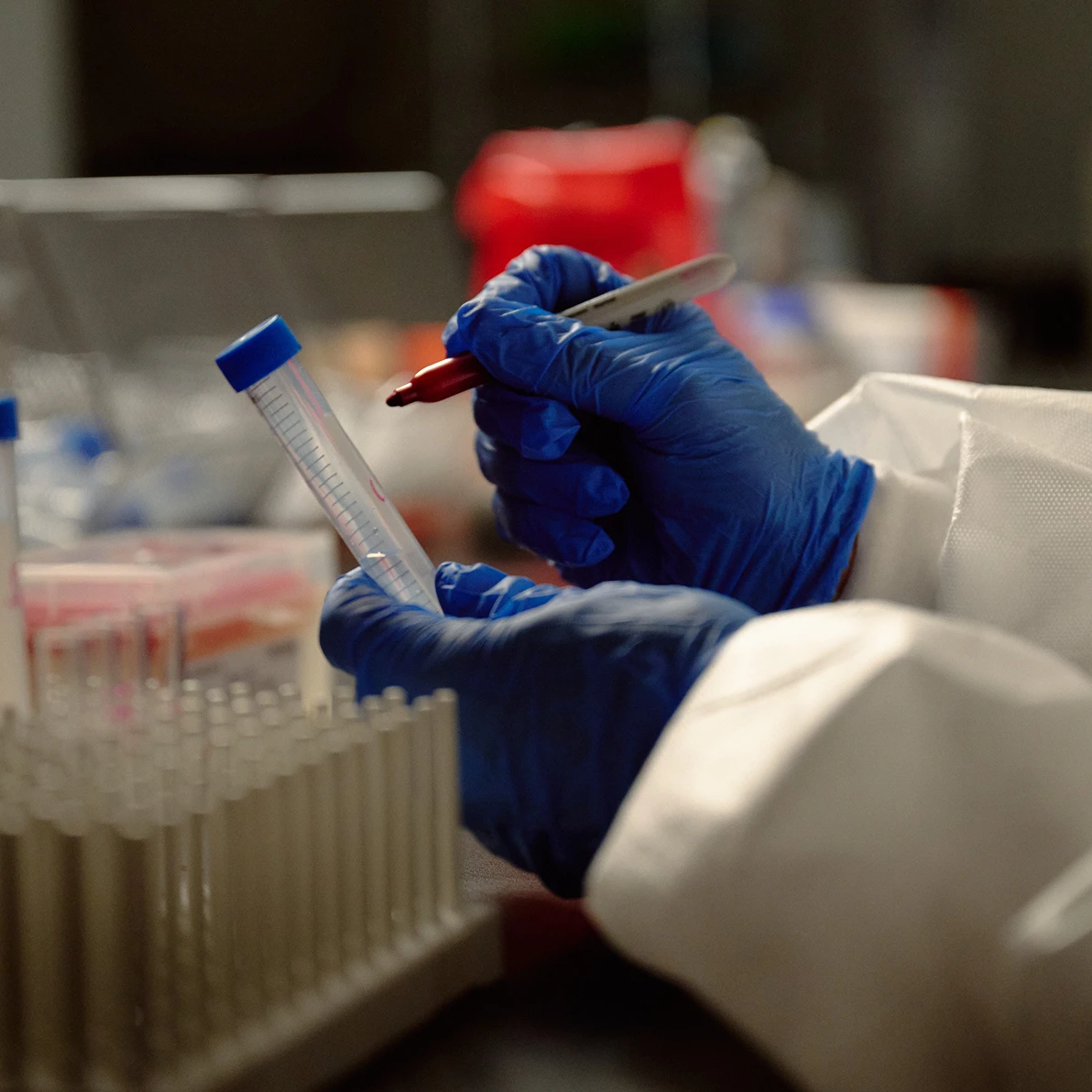
In partnership with scientists and mathematicians, we’re building AI systems that fit naturally into real research, designed to empower researchers to explore more ideas, test hypotheses faster, and uncover patterns that would have taken months or years to find alone. By deeply understanding how science actually happens, we’re working on tools that integrate seamlessly into existing workflows, from literature review and proof generation to modeling, simulation, and automation.
How scientists and AI are already collaborating
Using our products, scientists across fields have gained a fast, knowledgeable research partner.

Prism
Prism is a free, LaTeX-native workspace for scientific writing and collaboration, with GPT-5.2 integrated directly into the workflow. It brings drafting, revision, citations, equations, and publication prep into a single environment where AI works on the full context of a research project, supporting the iterative, careful process of scientific writing.

GPT-5
With GPT‑5, mathematicians have generated correct proofs in minutes, physicists have seen the model rediscover hidden symmetry structures, biologists have validated mechanisms and follow-up experiments it proposed, and researchers across fields have used it to surface deep conceptual links in the literature that humans had missed.
Open Models
gpt-OSS provides open, inspectable models that researchers can run, modify, and build on directly. It enables experimentation, customization, and transparency for scientists who want to adapt AI to their own methods, data, and environments.
Prompting strategy for scientists
Working with GPT‑5 for science is a skill. The model is capable of deep reasoning, conceptual search, and formal computation, but scientists get the best results when they use it deliberately. The guidance below captures early lessons from researchers across math, physics, biology, and computer science on how to structure prompts, provide context, and collaborate with the model to accelerate real scientific work.