VfL Wolfsburg turns ChatGPT into a club-wide capability
By focusing on people, not pilots, the Bundesliga club is scaling efficiency, creativity, and knowledge—without losing its football identity.
VfL Wolfsburg reports:
- 50+ custom GPTs in active daily use across operations, communications, marketing, HR, and administration
- Six-figure annual cost savings through reduced reliance on external agencies for repeatable work
- Faster drafting, translation, and standardization across core workflows
- Broad-based adoption, from non-technical roles to former players, driving self-propelled usage.

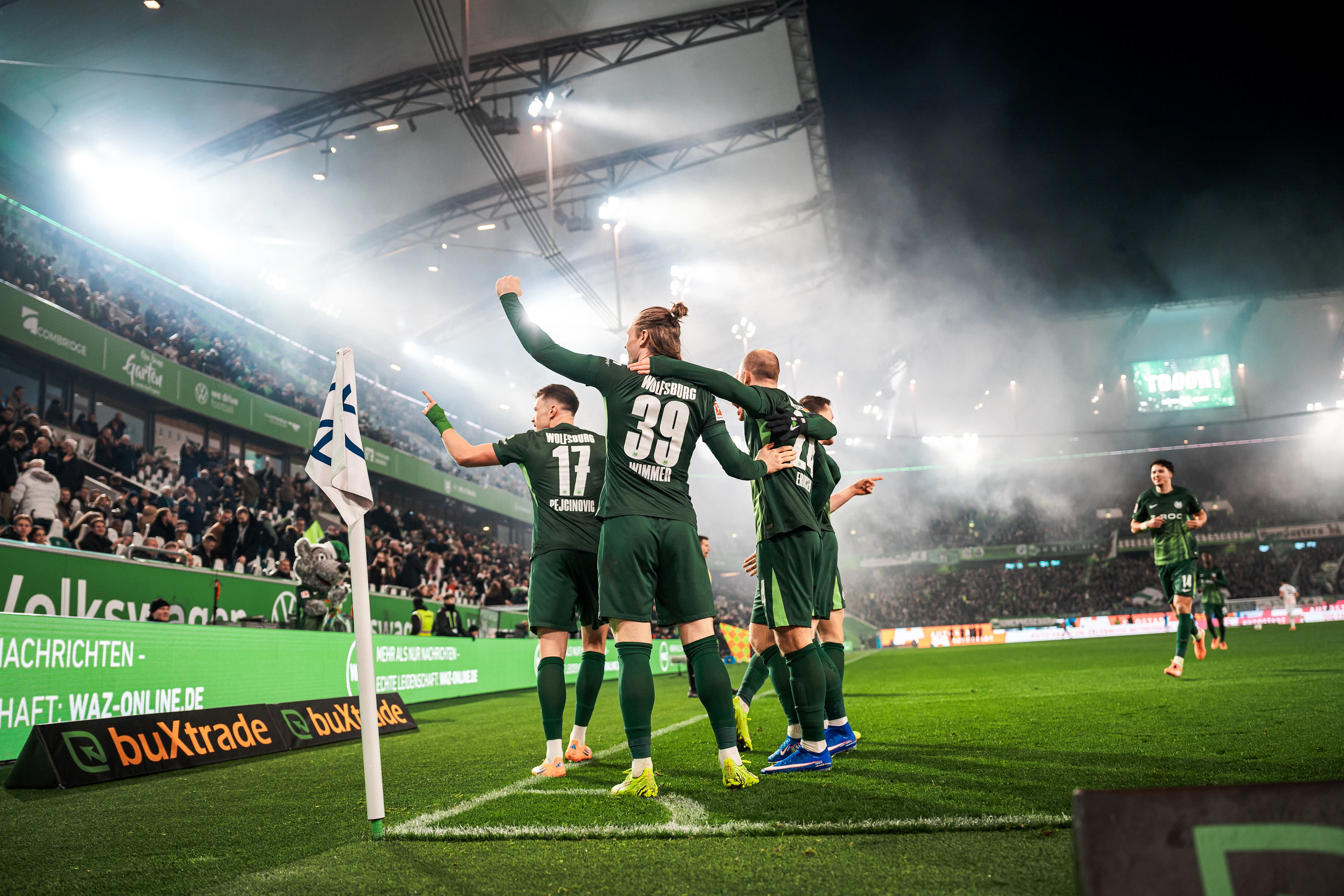
At VfL Wolfsburg, football is built on discipline, continuity, and trust. For nearly three decades, the club has been a constant presence in the Bundesliga—backed by strong men’s and women’s teams, a future-oriented academy, and a fast-evolving digital and commercial ecosystem.
But modern football is no longer defined by performance on the pitch alone. Expectations from fans, partners, and internal stakeholders continue to rise—while budgets and headcount cannot scale indefinitely.
This tension between growing expectations and limited scalability created a clear need for new ways of working. The question was how to apply it in a way that felt credible in one of the world’s most heritage-driven sectors.
“In football, tradition is an important value,” says Linus Lebugle, Head of Business Development. “Change isn’t always easy. But innovation is part of our DNA—and we couldn’t just keep adding people while the workload kept growing.”
Across the club, the same challenges kept appearing:
- Repetitive drafting, translation, reporting, and documentation slowed teams down
- Critical knowledge sat with a few specialists, creating bottlenecks
- External agencies handled routine work, but at high cost and without building internal capability
These challenges highlighted a core tension: the club needed to increase impact and consistency—without increasing headcount.

VfL Wolfsburg began focusing on Generative AI in 2023 with a clear mindset: this would not be a niche innovation project or a future experiment. It would be a capability built across the club, with people at the center.
“ChatGPT only creates sustainable advantages if it’s understandable and usable for everyone—not just experts,” says Claudio Demmer, Business Innovation Lead.
Instead of starting with strategy decks, Wolfsburg started with real work: workshops, hands-on experimentation, and department-led use cases. The goal was simple and pragmatic—save time, reduce external costs, and improve consistency and quality.
A key learning was that adoption worked best when AI was applied to recurring tasks and built around existing templates and workflows, like newsletters or merchandise product imagery—allowing teams to generate useful outputs immediately without changing how they worked.
“We didn’t start with strategy decks—we started with learning what works, together with the people doing the work,” says Linus Lebugle, Head of Business Development.
After evaluating multiple tools and approaches, VfL Wolfsburg chose ChatGPT Enterprise for a combination of reasons.
Over the previous year, the club had already built meaningful experience with Generative AI, working with ChatGPT Team and Business licenses. Trained teams, established use cases, and visible day-to-day impact demonstrated clear value, but scaling was limited by access and governance.
“Once we saw trained teams, real use cases, and measurable impact, the question wasn’t whether AI works,” says Lebugle. “The question was how to scale it properly and responsibly across the entire organization.”
Moving to ChatGPT Enterprise allows VfL Wolfsburg to scale this existing momentum, expand access to roughly 350 employees, and create a consistent, secure foundation for AI usage across the entire organization—while actively preparing people for new ways of working in an increasingly AI-driven environment.
ChatGPT Enterprise was selected in particular for:
- Strong output quality for day-to-day knowledge work
- Enterprise-grade security and governance, including EU server options; OpenAI does not use customer data to train models
- Fast time-to-value without heavy IT build-out
- Intuitive usability that works across non-technical roles
“If you want to change the way you work, you need tools that people aren’t afraid of,” says Demmer. “ChatGPT removed that barrier immediately.”
Adoption accelerated when Wolfsburg stopped talking about abstract “AI tools” and started building custom GPTs around real workflows.
Today, VfL Wolfsburg operates a growing ecosystem of nearly 100 custom GPTs across operations, communications, marketing, partnerships, HR, and strategy. Around half of these were actively supported by the central innovation team; the rest were created independently by colleagues within departments—often without direct involvement from the core AI team.
To encourage adoption, many of these assistants are given human-like names internally—without blurring responsibility or decision-making—helping teams treat AI as a practical, accessible layer of support rather than a specialist technology.
What started as experimentation quickly became a repeatable model: identify a bottleneck, turn it into a GPT, and scale access across the club.
To support deeper and more sustainable adoption, VfL Wolfsburg is also building a network of internally trained GPT Champions (“GPTlers”). These colleagues act as local experts within their departments—supporting others in applying AI effectively and helping them build GPTs themselves. While this initiative is still in its early stages, it has already helped reach the broader organization and will be a key factor in moving teams from basic usage to more advanced, value-driving applications.
“We didn’t implement AI for a few specialists,” says Lebugle. “We wanted every department to be able to build—and the most effective solutions emerged when teams started learning and building together, not in isolation.”
A few standout examples:
Turf Disease GPT (Operations): Staff upload a photo of a turf issue and receive likely causes, checks, and a structured treatment plan—spreading expertise beyond a single specialist.
Football School Invoicing GPT (Administration): Turns structured inputs into ready-to-send, branded invoices—cutting down on errors and formatting time.
“Hannah” (HR GPT Builder): A guided assistant that asks seven standardized questions and auto-generates GPT prompts, enabling safe, consistent GPT creation across non-technical teams.
ESG Check GPT (ESG): Creates structured ESG assessments including evaluations, goals, measures, policies, and simple “traffic light” scoring.
Across workshops, teams identified hundreds of potential tasks where Generative AI could add value. Many of these are handled efficiently directly in ChatGPT—such as drafting, summarizing, translating, or structuring one-off documents and communications.
For workflows that were highly repeatable or business-critical, the club took an additional step and productized them as custom GPTs, embedding templates, tone of voice, and guardrails. This combination—everyday chat usage alongside purpose-built GPTs—allowed teams to move quickly while still scaling consistency and quality across the organization.

As usage scaled, governance became an enabler - not a blocker. ChatGPT Enterprise provides a secure foundation, while VfL Wolfsburg reinforced a clear operating principle: AI supports work, but accountability always remains with humans. This clarity helped build confidence and adoption across departments.
“For us, the key was proving value in everyday work,” says Michael Meeske, CEO / Managing Director (Commercial). “Once that was clear, scaling AI across the club became a leadership responsibility, not an experiment.”
Success is measured through direct cost avoidance, conservative time-savings assumptions, and qualitative feedback from departments—not vanity metrics.
One of the biggest surprises for VfL Wolfsburg was how quickly adoption began to scale on its own once people experienced practical wins in their daily work.
Teams that initially approached Generative AI with caution became active drivers after seeing it solve real problems—saving time, reducing friction, or improving quality in workflows they cared about. Giving custom GPTs human-like names such as Ulf, Olivia, or Hannah further reduced psychological distance and helped teams relate to AI as a practical colleague rather than an abstract technology.
Even more striking was who leaned in. Colleagues who wouldn’t typically be described as “digital natives” began proactively asking for GPTs, showing genuine excitement in workshops, and pushing the topic forward within their own departments.
“That was the moment we realized this wasn’t niche innovation,” says Claudio Demmer. “When people see AI solving real problems in their own work, seniority or background doesn’t matter anymore.”
One workshop moment made this shift tangible. “There was a former player— initially reserved,” Demmer recalls. “Half an hour later, he was our biggest fan. We built a GPT that helped him create creative storytelling for the kids he trains—and he walked out buzzing.”
“What we gained most is a spirit of new beginnings,” Demmer adds. “There’s a real sense of momentum—this feeling of ‘let’s start now.’”

With proven use cases, trained teams, and growing internal momentum, VfL Wolfsburg is now moving from targeted adoption to organization-wide capability. The next step is scaling access to ChatGPT Enterprise across the club—creating a consistent foundation that enables every employee to work confidently with AI.
At the same time, the club plans to continue expanding its ecosystem of named “AI colleagues,” standardizing recurring workflows while enabling deeper, more advanced use within departments through GPT Champions and shared learning.
Beyond internal productivity, VfL Wolfsburg also sees long-term potential in selected fan- and partner-facing experiences—such as personalization, internationalization, and interactive content formats—once governance, operating models, and accountability structures are fully mature.
The biggest constraint at this next stage is not technology, but change management at scale: ensuring consistent training, standards, and safe usage across a diverse organization while maintaining speed and creativity.
“What we’ve built so far gives us confidence,” says Claudio Demmer. “There’s a real sense of momentum—a feeling that says: let’s start now, and let’s move forward together.”
“AI is not a future topic in football anymore—it’s something leaders need to take seriously today,” adds Meeske. “For us, the focus was never technology alone, but creating a capability that strengthens how the club works across departments.”