STADLER reshapes knowledge work at a 230-year-old company
Embedding ChatGPT across 650 employees to turn hours of knowledge work into minutes—scaling speed, quality, and decision-making company-wide.

Results
125+
Custom GPTs created
Results
30-40%
Time savings on common knowledge tasks
Results
2.5x
Faster time to first draft on average
Results
>85%
Daily active usage
From industrial legacy to digital leverage
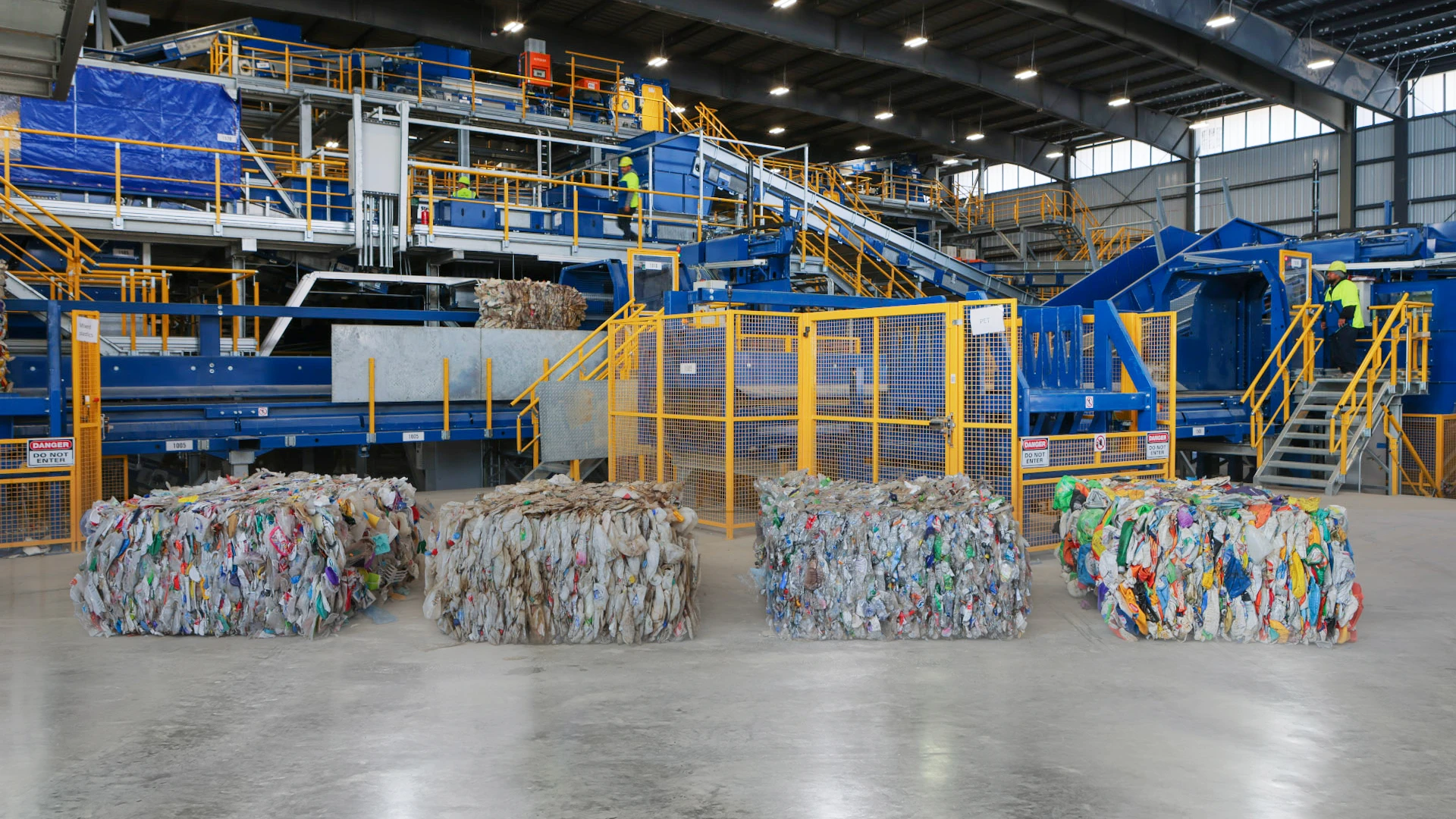
STADLER is a family-owned company with more than 230 years of history, specializing in automated waste sorting plants for the global recycling industry. With over 650 employees operating worldwide, the company plays a critical role in helping countries advance their sustainability and circular economy goals.
Under the leadership of Co-CEO Julia Stadler, the company has taken a forward-looking approach to modernization—embedding AI into everyday work as a core productivity layer. Since 2023, STADLER has pursued a clear principle: every employee working on a computer should use AI to improve speed, quality, and collaboration.
“In many teams, people were spending too much time turning raw knowledge into usable output—summarizing, translating, drafting. We knew there had to be a better way.”
Turning AI into a company-wide productivity layer
STADLER adopted OpenAI's ChatGPT to remove this friction, selecting it for its output quality, speed, and immediate usability.
After evaluating alternatives, ChatGPT consistently delivered more structured, context-aware, and practically useful results. Just as importantly, it enabled immediate value—teams could start generating usable outputs from day one.
The rollout combined bottom-up experimentation with top-down support. Employees were encouraged to explore use cases, while leadership provided company-wide access, training, and clear guardrails.
Today, ChatGPT is embedded across nearly every function:
- Engineering & data teams use it for analysis, code support, and performance evaluation
- Project and management teams use custom GPTs to structure processes and improve documentation
- Marketing teams translate complex technical knowledge into clear global communication
- All teams use it for drafting, summarizing, research, and structured thinking
STADLER has created more than 125 custom GPTs, with particularly strong adoption in translation and email workflows.
"We moved from needing half a day to get a decent first version to having a solid draft in 20 minutes—and then improving it," says Julia Stadler.
“ChatGPT isn’t just a writing tool—it’s a thinking partner that helps structure ideas and accelerate how we work.”
From blank page to business impact
The impact has been immediate and measurable. Tasks that once took hours—drafting documents, summarizing information, preparing communication—are now completed in minutes.
Instead of starting from scratch, employees begin with structured outputs and focus on refinement, decision-making, and higher-value work.
Key outcomes include:
- 30-40% time savings on common knowledge tasks such as summarizing and documentation
- 2.5x faster time to first draft on average, with up to 6x acceleration in high-volume use cases like social media
- >85% daily active usage, with employees engaging multiple times per day
- Faster decision-making, driven by quicker access to structured insights
- Higher-quality outputs, with improved clarity, consistency, and structure
- Reduced friction, making complex tasks easier to start and complete
“The most meaningful signal is how often people come back to it. When employees use it multiple times a day without being asked, you know it’s delivering real value.”
Beyond efficiency gains, STADLER has seen a broader shift in how teams work. Employees increasingly use ChatGPT to clarify thinking, explore ideas, and structure complex problems. What started as a productivity tool became a cognitive one.
What comes next: from assistant to execution layer
STADLER now sees AI evolving beyond assistance into execution.
The next phase is integrating AI agents into core workflows—systems that can gather information, generate outputs, validate against standards, and route work for approval.
For a company with more than two centuries of history, the transformation is already clear. By embedding AI into everyday work, STADLER is operating with greater speed, agility, and intelligence—unlocking a new level of productivity across its global organization.