Introducing ChatGPT for Excel and new financial data integrations
Use ChatGPT in Excel to build, update, and analyze spreadsheets faster, and new integrations in ChatGPT for financial workflows.
Today, we’re introducing ChatGPT for Excel(opens in a new window) in beta, an Excel add-in that brings ChatGPT directly into workbooks to help build and update models, run scenarios, and generate outputs based on cells and formulas. Powered by GPT‑5.4, it helps users do more in Excel, supports power users in moving faster, and can improve consistency across teams.
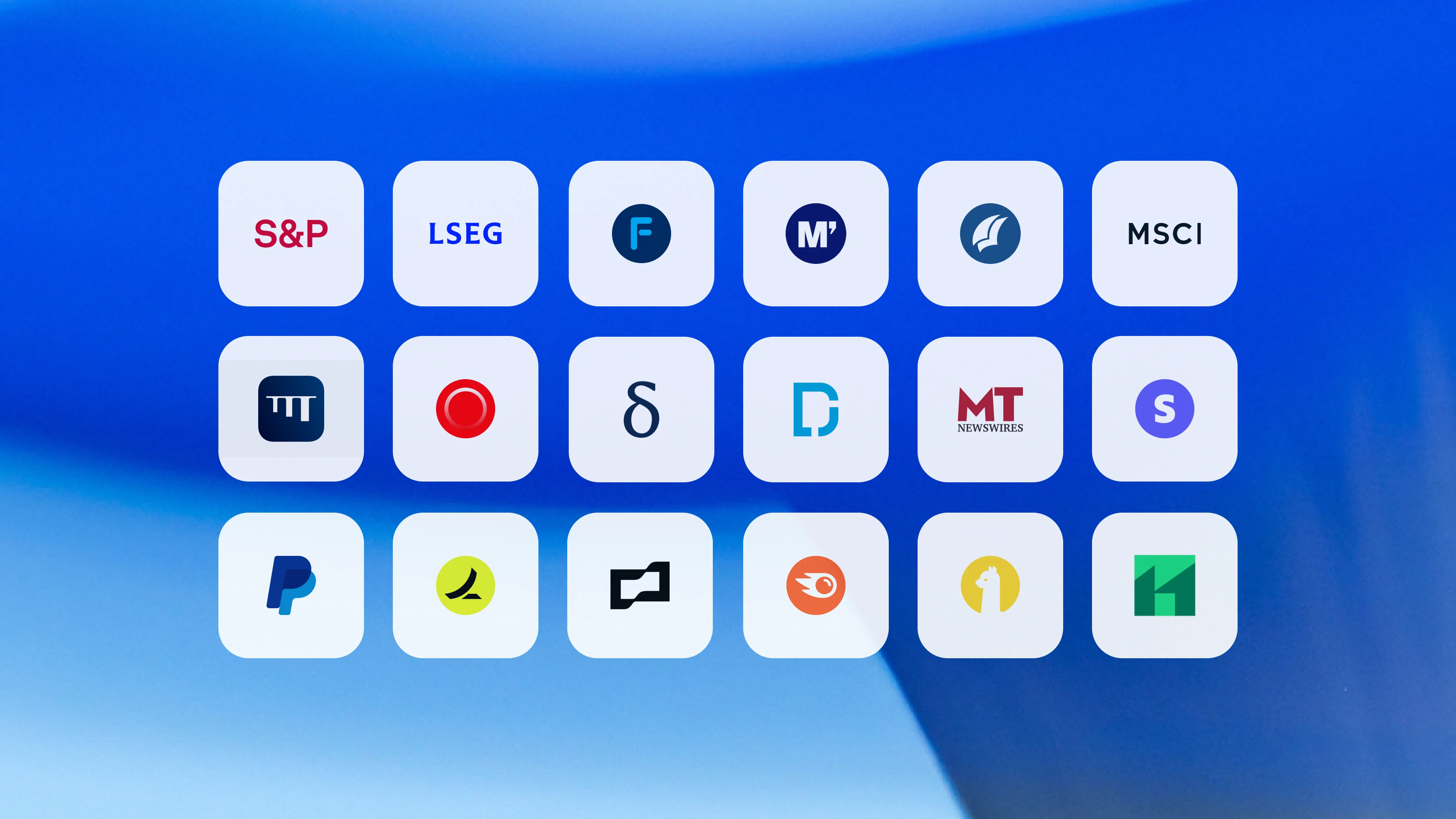
We’re also adding financial data integrations directly in ChatGPT for FactSet, Dow Jones Factiva, LSEG, Daloopa, S&P Global, and more, making it easier to work with trusted financial data inside ChatGPT. Together, these capabilities help teams spend less time on manual work and more time on analysis, decisions, and execution.
GPT‑5.4 (as GPT‑5.4 Thinking) is available today in ChatGPT, Codex, and the API. It’s our most advanced model, ideal for financial reasoning and Excel-based modeling. We’ve worked closely with industry practitioners to improve GPT‑5.4 on real-world finance workflows that often take analysts hours or days to complete, including financial modeling, scenario analysis, data extraction, and long-form research. The result is stronger performance on the tasks finance professionals rely on every day.
On OpenAI’s internal investment banking benchmark, which evaluates real-world workflows such as building a three-statement model with proper formatting and citations, performance improved from 43.7% with GPT‑5 to 87.3% with GPT‑5.4 Thinking.
We’re introducing ChatGPT for Excel in beta—a version of ChatGPT embedded directly in spreadsheets that can build, analyze, and update models using the same formulas and structures teams already rely on. Analysts, strategists, researchers, and accountants can move faster, reduce manual work, and focus on judgment and decision-making instead of writing formulas, tracing links, and fixing models.
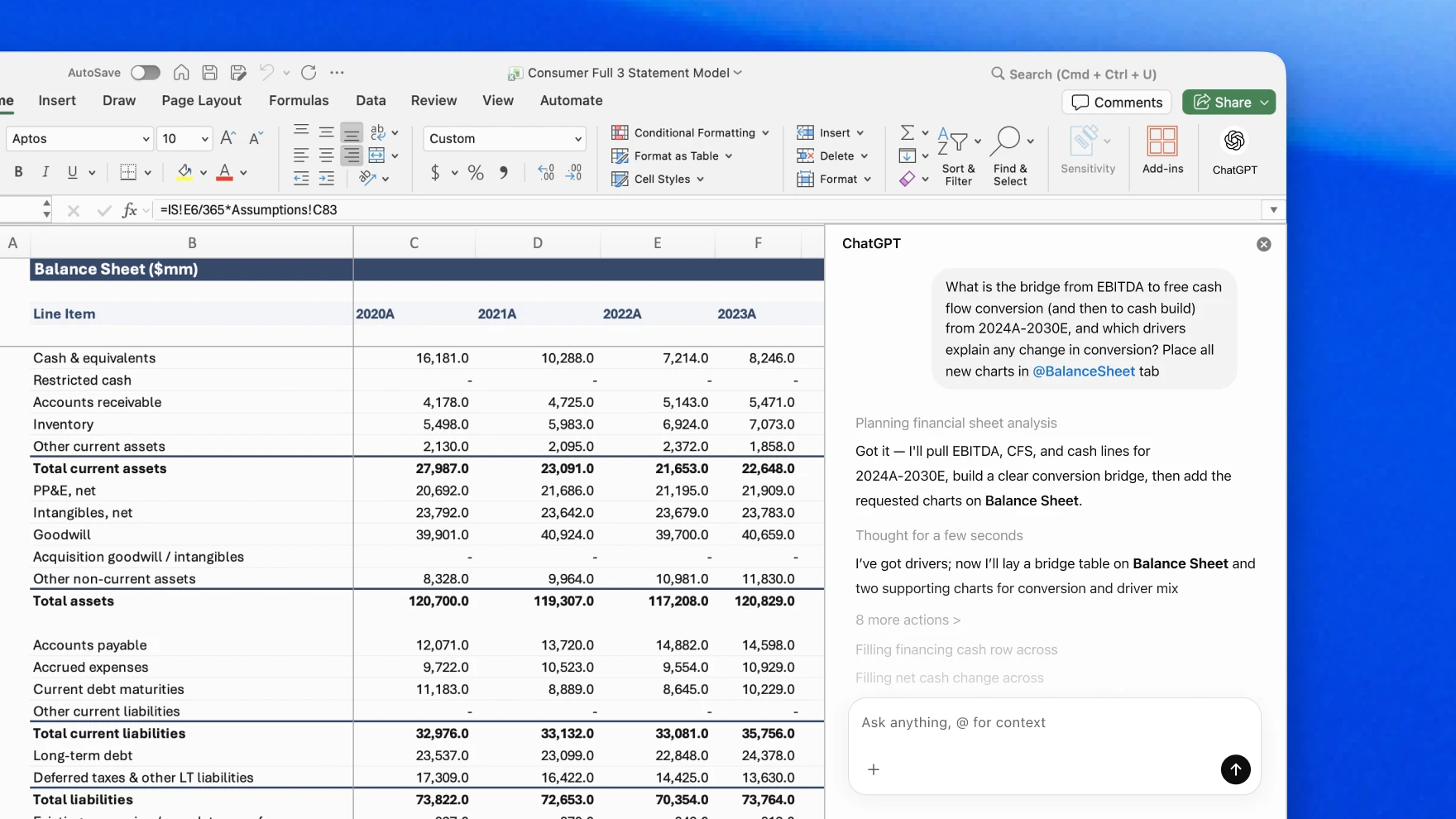
- Build and update spreadsheet models faster. Instead of building spreadsheet models or running scenario analysis manually, teams can describe what they need in plain language, and ChatGPT will create or update live Excel models directly in the workbook. Teams can run data analysis, reporting, inventory management, budgeting—all while preserving structure, formulas, and assumptions in a formatted, Excel-native workbook.
- Get insights from large spreadsheets without manual reconciliation. ChatGPT can reason across workbooks, understand how sheets and formulas connect across the model, explain why outputs changed, trace and fix errors, and show how assumptions flow through a model. This is especially useful when users inherit existing templates, need to get up to speed quickly, or want to understand and test a workbook before making decisions.
- Follow the logic and trust the outputs. ChatGPT explains what it’s doing as it works and links answers to the exact cells it references and updates. Because calculations run directly in Excel, teams can trace assumptions, audit formulas, and verify how results were produced. Before making changes to a workbook, ChatGPT asks for permission, so users can review each step and undo edits if needed.
We are improving ChatGPT for Excel quickly based on user feedback. Some responses may take longer as we optimize performance, and generated outputs may occasionally require cleanup or adjustment to match preferred spreadsheet formatting or layout conventions. ChatGPT can generate and explain formulas, but complex formulas or edge cases may still require manual refinement.
Starting today, ChatGPT for Excel(opens in a new window) in beta is rolling out for ChatGPT Business, Enterprise, Edu, Teachers, Pro, and Plus users in the U.S., Canada, and Australia. ChatGPT for Google Sheets is coming soon.
In Enterprise, Edu, and Teacher workspaces, access is off by default. Admins can enable it for specific users with custom roles and group permissions.
For teams working in financial workflows, new data integrations and support for proprietary data through building your own apps using Model Context Protocol (MCP)(opens in a new window), make it easier to bring market, company, and internal data into a single workflow in ChatGPT. With GPT‑5.4, ChatGPT can handle longer context and more complex tasks, helping teams move faster on company research, model refreshes, and cited outputs for valuation, diligence, underwriting, and related work.
Simplify research and analysis
Integrations released today—including Moody’s, Dow Jones Factiva, MSCI, Third Bridge, and MT Newswire, with FactSet coming soon—bring market, company, and internal data into a single workflow in ChatGPT, as part of a growing ecosystem of apps. This helps users spend less time gathering inputs to produce cited outputs such as earnings summaries, valuation snapshots, and credit memos faster.
Quickly conduct due diligence
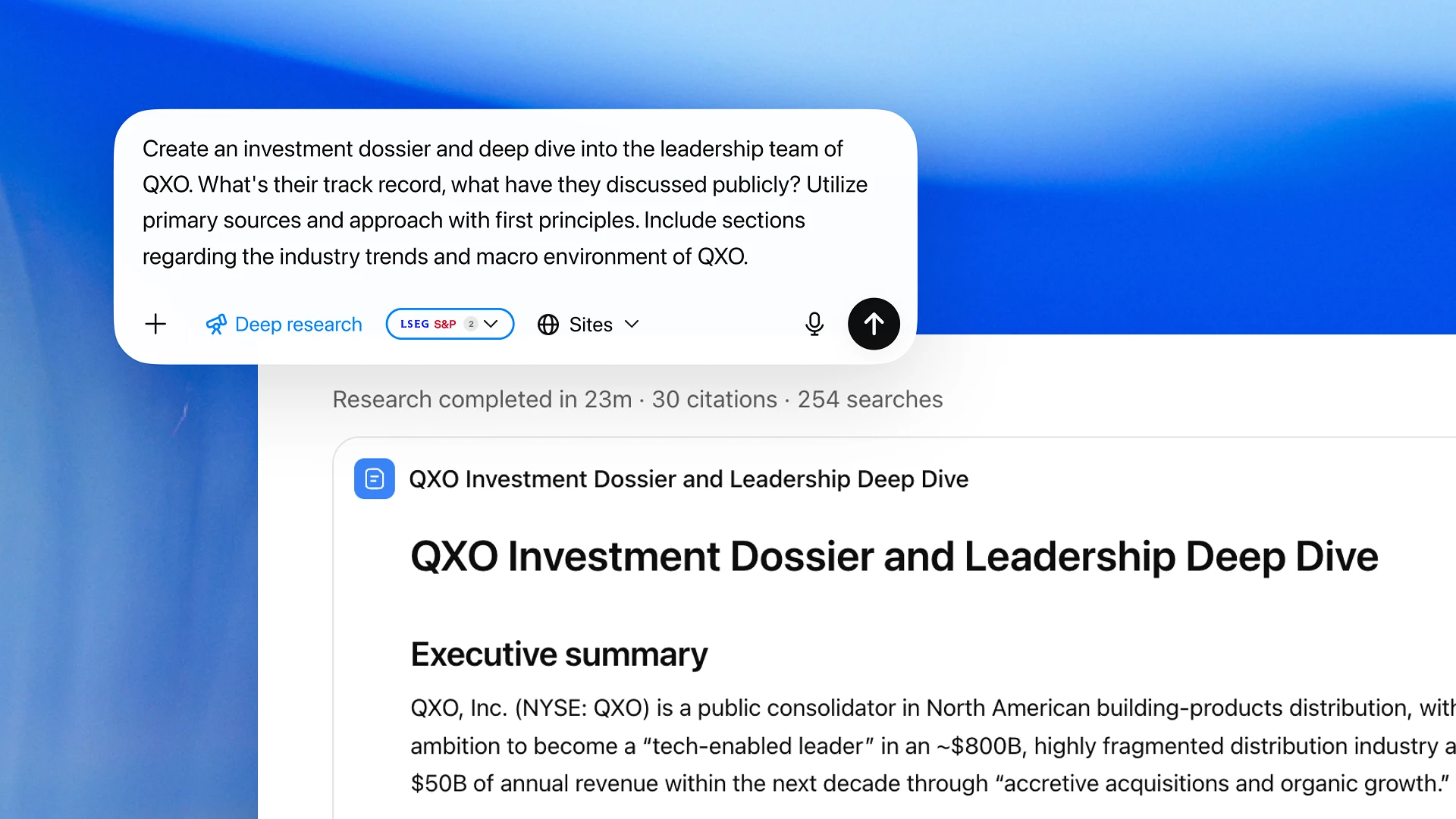
Teams can also use apps with research in ChatGPT to pull from filings, transcripts, decks, and spreadsheets to produce structured, cited outputs that export to PDF or Microsoft Word. Recent updates give users more control over the research process, including the ability to focus on specific websites and data sources, shape the research plan before and during a run, and review sources and citations in a redesigned workspace.
For organizations adopting ChatGPT at work, ChatGPT Enterprise includes the security, governance, and access controls needed to use ChatGPT confidently, especially in regulated or data-sensitive environments:
- Manage and monitor access with RBAC, SAML SSO, SCIM, and audit logs, with support for common DLP and SIEM tools.
- Protect firm data with encryption in transit with TLS 1.2+ and at rest with AES-256, plus enterprise key management support.
- Meet regional data requirements with data residency and regional processing controls.
- By default, data shared with ChatGPT Enterprise is not used to train or improve our models.
Learn more about our enterprise-grade security, privacy, and compliance programs. Explore apps today(opens in a new window), or contact our team to learn more.
We’re working closely with financial institutions as they apply ChatGPT across research, underwriting, auditing, client engagement, code modernization, and operations. Across banks, asset managers, and insurance, we’re seeing impact in workflows like due diligence, client experience, and investment research—and we’ll keep learning alongside customers as they scale their AI deployments.
“ChatGPT has materially accelerated our research and due diligence workflows—from financial analysis and market research to legal review and writing internal memos—while improving consistency across teams. It has expanded our team’s capacity, freeing our investment professionals to focus more time on judgment, debate, and conviction. We’re excited to be early adopters of new capabilities and to help shape how AI transforms financial services in the years ahead.”
This launch builds on OpenAI’s ongoing work with analysts, strategists, researchers, and accountants. We’re learning from real-world deployments to improve our products and models and help institutions move faster while operating responsibly in regulated environments.
To learn more, contact our team. Enterprise customers can build directly with OpenAI or work alongside experienced partners such as Accenture, Bain, Boston Consulting Group (BCG), McKinsey & Company, and PwC to integrate AI into existing data, applications, and operating models.